Concrete Parking Lots in Lauderhill
Concrete Parking Lots for Lauderhill Businesses
We serve Lauderhill, FL and surrounding areas for concrete parking lot installation
We provide concrete parking lot construction throughout Lauderhill, FL and the surrounding communities, including areas near Inverrary, the Lauderhill Mall area, Garden Acres, and along major corridors like State Road 7, Oakland Park Boulevard, and University Drive. Whether your property is close to Central Broward Regional Park or sits along Sunrise Boulevard, we can come out and assess your site without a long wait. We work with commercial property owners, apartment complexes, and businesses of all sizes, and we are available to discuss your project and get you a straightforward estimate.
The problem: your current parking lot is failing your property and your tenants or customers
A deteriorating parking lot does more than look bad. It creates real problems for the people who use your property every day. Cracked pavement, standing water after rain, uneven surfaces, and faded markings all send the wrong message to customers and tenants. Beyond appearances, a failing lot can become a liability when someone trips on a broken slab or a vehicle is damaged by a deep rut. If you are weighing parking lot construction from scratch against patching the same spots over and over, you already know the repairs are adding up. At some point, continuing to patch an aging lot costs more than replacing it with a surface built to last. Understanding the full range of parking lot concrete benefits is a good place to start when making that call.
Why our local knowledge of Lauderhill matters for your parking lot project
Lauderhill sits in an area with challenging ground conditions. The subgrade in much of Broward County includes poorly graded sand, organic subgrade layers, and a high water table that can complicate concrete work if you do not account for it from the start. We have over 20 years of combined experience pouring concrete and more than 10 years working specifically in Lauderhill and the surrounding parts of South Florida. We know how the wet season affects surface drainage, how South Florida's heat and heavy rain cycles stress durable surfaces over time, and what the Lauderhill Building Division and Broward County Permitting offices require before a parking lot project can move forward. That local experience shapes every decision we make on a project, from subgrade stabilization to concrete mix selection to joint placement. When we work near properties around Inverrary Boulevard or NW 56th Avenue, we are not guessing at conditions. We have seen them firsthand.
Frequently asked questions about concrete parking lots in Lauderhill, FL
How long does a concrete parking lot last in South Florida?
A properly installed concrete parking lot in Lauderhill can last 30 years or more with basic upkeep. The key is getting the installation right from the beginning, including proper base preparation, the correct concrete mix, and adequate curing time.
Is concrete better than asphalt for a parking lot here?
The asphalt vs concrete question comes up often. In South Florida's climate, concrete holds up better under intense sun exposure and does not soften in the heat the way asphalt can. Concrete also carries a higher load-bearing capacity, which matters if your lot sees trucks, delivery vehicles, or heavy daily traffic.
Do I need a permit to build a concrete parking lot in Lauderhill?
Yes. Most commercial parking lot projects in Lauderhill require permits through the Lauderhill Building Division or the City of Lauderhill Development Services office. We handle the permit process as part of the project so you are not navigating that on your own.
What does a concrete parking lot cost?
Pricing depends on the size of the lot, site conditions, thickness requirements, and any drainage or grading work needed. We provide written estimates based on a site visit so you get accurate numbers, not ballpark figures. Contact us to set up a time to walk the property.
Understanding what a concrete parking lot actually involves, from how it is built to what makes one installation better than another, is a helpful next step before making a final decision.
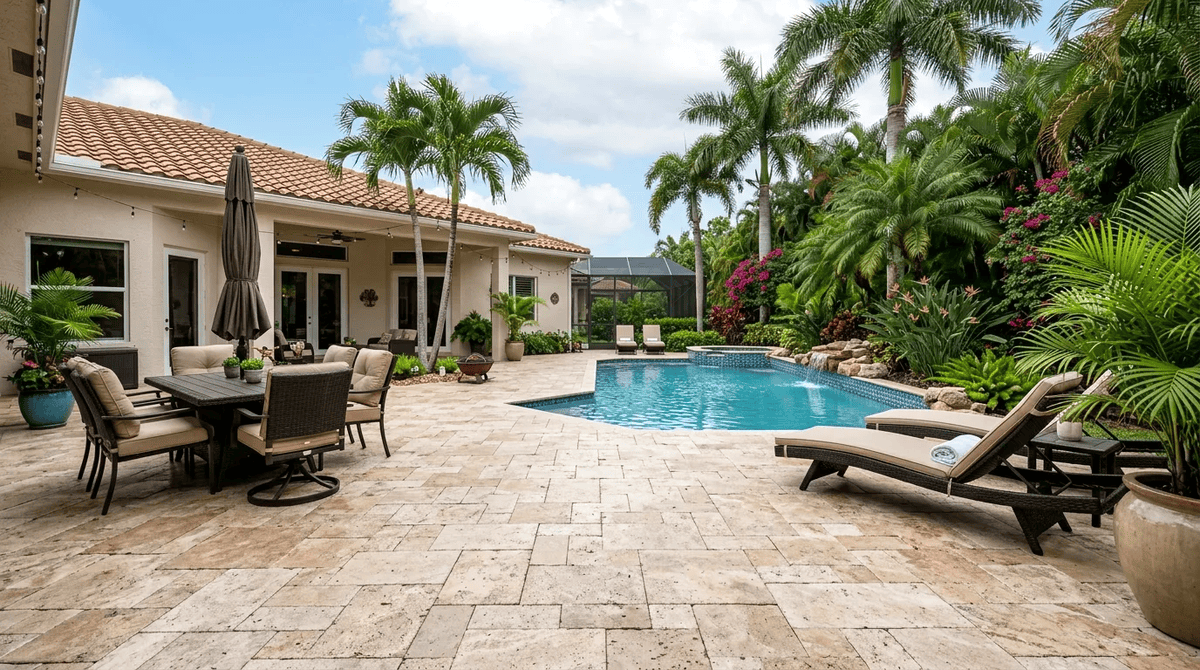
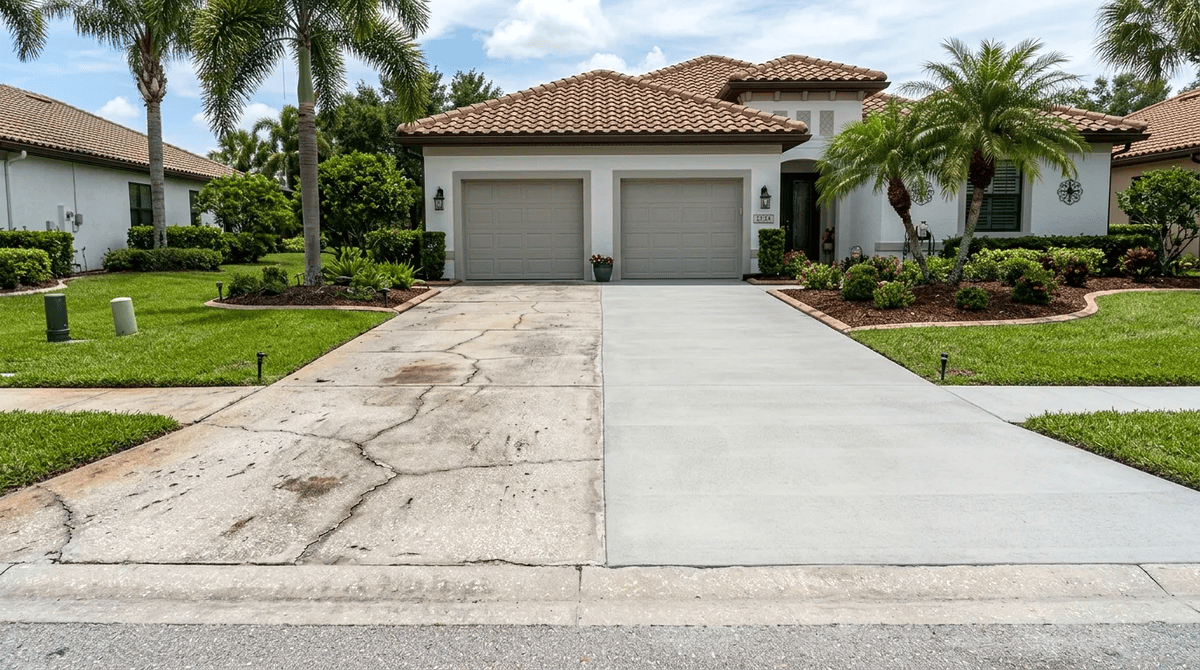
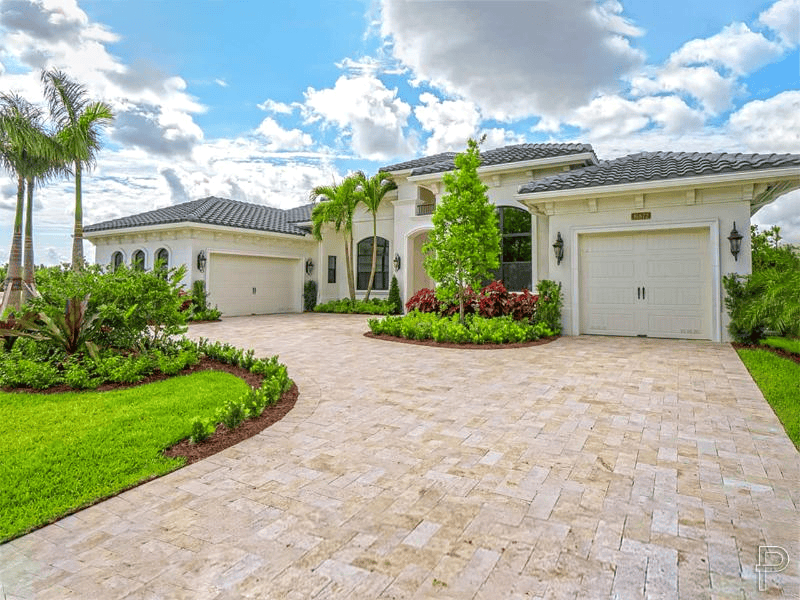
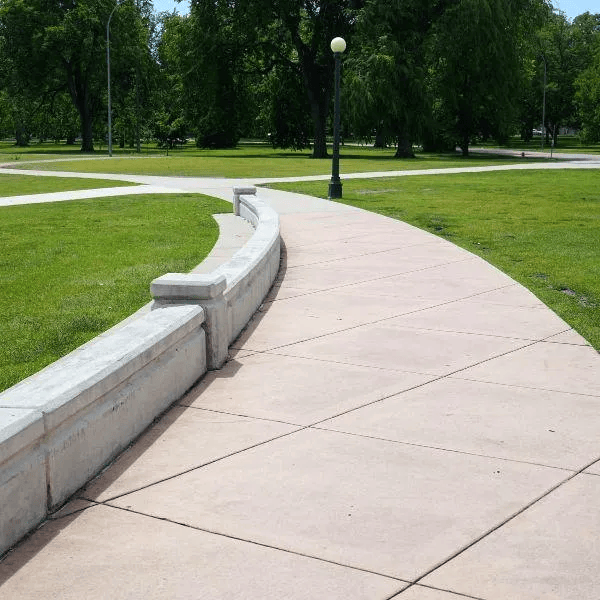
What Is a Concrete Parking Lot
A concrete parking lot is a paved surface built from Portland cement, aggregate, water, and reinforcing materials like epoxy-coated rebar or welded wire reinforcement. Unlike loose gravel or paver systems, concrete pavement forms a solid, rigid slab that spreads vehicle loads across a wide area. When built correctly, a concrete parking lot can handle decades of daily use without significant deterioration.
How Concrete Parking Lots Differ from Asphalt and Other Paved Surfaces
The asphalt vs concrete comparison comes up often for parking lot projects, and the differences matter. Asphalt is a flexible pavement that relies on a petroleum-based binder. It tends to soften in heat, which is a real issue here in South Florida. Concrete is a rigid slab that holds its shape under both heavy loads and high temperatures. In the Lauderhill area, where summer heat is constant along corridors like Sunrise Boulevard and Oakland Park Boulevard, concrete generally holds up better over time. Asphalt also requires more frequent resealing and resurfacing to stay functional. Concrete surfaces typically need less routine attention, which adds up to meaningful savings over the life of the lot.
What Types of Properties Use Concrete Parking Lots
We work on concrete parking lots for a wide range of properties across Lauderhill and the surrounding Broward County area. Shopping centers near the Lauderhill Mall, apartment complexes in Inverrary, medical offices along University Drive, and light industrial facilities near State Road 7 all benefit from heavy-duty concrete surfaces. Any property that sees regular truck deliveries, emergency vehicles, or high daily traffic volume needs a surface with strong load-bearing capacity. Concrete handles that demand well. If you manage a commercial or multi-family property, a properly built concrete lot is one of the more practical long-term investments you can make in the site.
What the Installation Process Looks Like from Start to Finish
Parking lot construction starts well before any concrete is poured. We begin with site evaluation and grading, which is especially important in Lauderhill where the terrain is flat and the water table can sit high. Getting surface drainage right from the start prevents pooling and premature slab damage. After grading, we compact a base layer, typically a 12-inch compacted limerock base, before placing reinforcement. For most commercial lots, we use a 6-inch slab thickness with a target compressive strength of 4,000 psi. Once the concrete is placed using equipment like a laser screed and power trowel, the slab goes through a controlled curing period to reach its full 28-day cure strength. Joint spacing and expansion joint filler placement are handled carefully to manage cracking as the slab moves with temperature changes. The whole process requires permits through the Lauderhill Building Division and must meet the Florida Building Code along with applicable Broward County amendments.
With over 20 years of combined concrete experience and more than 10 years working specifically in Lauderhill, we know what this local soil and climate demand from a parking lot. That foundation of experience shapes every decision we make on a job, from mix design to finishing. Once the slab is in place and cured, the real advantages of choosing concrete over other materials start to become clear.
Benefits of Choosing Concrete for Your Parking Lot
If you are planning a new parking lot for your business or commercial property in Lauderhill, the material you choose matters more than most people realize. We have spent over 20 years pouring concrete and more than 10 years working right here in Broward County. In that time, we have seen firsthand how concrete holds up against heavy use, Florida's weather, and the long-term demands of commercial properties. Here is a straightforward look at why so many property owners in Lauderhill choose concrete over other surfaces.
Durability and Long Lifespan Under Heavy Vehicle Traffic
Concrete pavement is built to last. When installed correctly with the right mix and reinforcement, a concrete parking lot can serve your property for decades without major structural issues. Compared with asphalt, concrete resists rutting and surface deformation even under constant vehicle traffic. That kind of staying power makes a real difference for busy commercial lots near areas like Lauderhill Mall or along high-traffic corridors like State Road 7 and Oakland Park Boulevard.
Low Maintenance Requirements Over Time
One of the quieter advantages of concrete is how little attention it needs once it is properly installed and cured. Asphalt lots typically need re-sealing every few years and are more prone to cracking and surface breakdown. With concrete, routine parking lot maintenance is less frequent and less costly. Occasional concrete repairs and the right concrete sealants applied at the right intervals are usually enough to keep the surface in solid condition for years.
Superior Load-Bearing Strength for Trucks and Delivery Vehicles
If your property sees delivery trucks, service vehicles, or heavy equipment on a regular basis, load-bearing capacity is not something to take lightly. Heavy-duty concrete, typically poured at a 6-inch slab thickness with a compressive strength of 4,000 psi and reinforced with epoxy-coated rebar or welded wire reinforcement, handles that kind of stress without breaking down the way lighter surfaces do. This is especially important in Lauderhill where the underlying soil, often sandy loam subgrade or areas with a high water table, requires a strong slab to compensate for what is below.
Clean Professional Appearance and Curb Appeal
A well-finished concrete lot looks clean and professional. For businesses, apartment complexes, and commercial properties, that appearance reflects directly on the property itself. Whether your lot serves customers visiting a retail space near Inverrary or tenants at a residential complex in Garden Acres, a smooth and uniform surface texture makes a better impression than a patched or faded asphalt lot.
Long-Term Cost Savings Compared to Other Surfaces
The upfront cost of concrete parking lot construction is typically higher than asphalt. That is worth being honest about. But when you factor in the longer lifespan, lower maintenance demands, and reduced need for concrete resurfacing over time, the numbers often favor concrete over the life of the lot. Many property owners find that the savings add up significantly over a 20 to 30 year period.
Weather Resistance in South Florida's Heat and Rain
South Florida puts surfaces through a lot. Between the intense sun, high humidity, and heavy rain that comes through Lauderhill throughout the year, your parking lot needs to hold up against real conditions. Concrete does not soften in the heat the way asphalt can, and when it is built with proper surface drainage in mind, it handles heavy rainfall without significant damage. For properties near low-lying areas or close to waterways like the North Fork Middle River, good drainage design is part of every job we do.
Improved Safety With a Level and Stable Surface
Uneven pavement, potholes, and standing water create real hazards for both drivers and pedestrians. A properly graded and finished concrete lot reduces those risks from day one. Durable surfaces that stay level over time mean fewer trip hazards, less puddling after rain, and a safer environment for everyone using the lot.
Better Visibility Due to Concrete's Lighter Color
Concrete is naturally lighter in color than asphalt, which improves visibility in parking areas, particularly at night or in shaded sections of a larger lot. For properties with high foot traffic or lots that stay busy after dark, that difference in surface brightness is a practical safety benefit.
Customization Options for Finishes, Textures, and Markings
Concrete is not a one-size-fits-all surface. Depending on your needs, we can apply different finishes, adjust the surface texture for better traction, and include striping or marking directly on the slab. For properties that need to meet specific parking lot design requirements, including stall dimensions, aisle widths, or accessibility standards, concrete gives us more flexibility to get the details right. Some property owners also ask about permeable concrete options, which can help with surface drainage and are worth discussing depending on your site conditions and local requirements through the Lauderhill Building Division.
Higher Property Value for Commercial and Industrial Properties
A well-built parking lot adds real value to commercial and industrial properties. It signals that the property is maintained, functional, and ready for business. Whether you are looking to attract tenants, customers, or future buyers, a quality concrete lot is an asset that shows up in how your property is perceived and appraised.
Understanding why concrete is a strong choice is just one part of the picture. Knowing what it actually takes to build a concrete parking lot correctly is where things get more specific, and that starts with what happens before the first truck of concrete ever arrives on site.
A few years back, we took on a concrete parking lot job for a small shopping center off University Drive here in Lauderhill. The client needed the lot done quickly because new tenants were moving in within a few weeks. We felt confident going in, but this project ended up teaching us a lot.
About halfway through the pour, the sky opened up. If you live in Lauderhill, you know how fast our South Florida afternoon storms can roll in during the summer months. We had roughly 3,000 square feet of fresh concrete down, and the rain hit hard and fast. Rainwater on fresh concrete is a serious problem. It weakens the surface, causes scaling, and can ruin the finish entirely.
We moved quickly. Our crew covered what we could with plastic sheeting while others worked to redirect the water runoff away from the slab using temporary berms. We kept a close eye on every section to figure out which areas had been compromised and which ones were still in good shape.
Once the storm passed, we assessed the damage honestly with the client. A portion of the slab near the entrance had taken on too much water and needed to be removed and repoured. We did not try to patch over the problem. We pulled it up and started that section fresh.
The project finished just in time for the tenants to move in. The client appreciated that we were straight with them about what happened and how we fixed it. That is the kind of work our team has been committed to here in Lauderhill for over ten years, and it is something our more than 20 years of combined concrete experience has prepared us for.
What Goes Into Building a Concrete Parking Lot
Building a concrete parking lot is not as simple as pouring concrete over bare ground. There are several steps involved, and each one affects how well the finished lot holds up over time. We have over 20 years of combined experience with parking lot construction, including more than 10 years working on commercial properties throughout Lauderhill. Here is a look at what we do from start to finish.
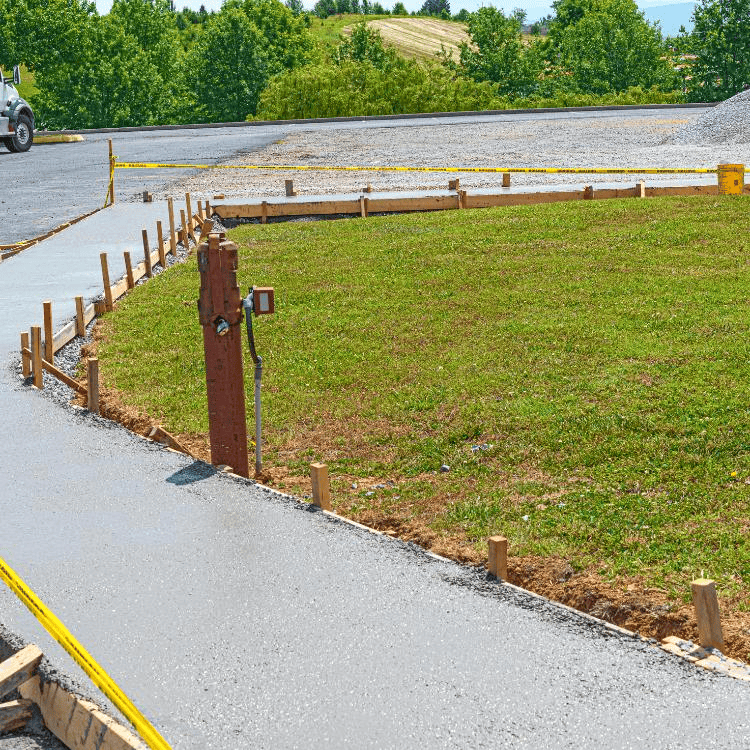
Site Evaluation and Grading for Proper Drainage
Before any concrete goes down, we take a close look at your property. Lauderhill sits on Florida flatwoods terrain with a high water table and poorly graded sand in many areas. Poor surface drainage is one of the biggest causes of parking lot failure in South Florida. We use total station survey equipment to map your site and grade it so water moves away from the slab and does not pool in the lot. Properties near areas like Inverrary or along Oakland Park Boulevard often need extra attention here because of how flat the surrounding land is.
Base Preparation and Subgrade Compaction
A strong parking lot starts below the surface. We remove any soft or organic subgrade material, which is common in parts of Lauderhill, and then compact the subsoil carefully. From there, we install a 12-inch compacted limerock base, which gives the slab a stable foundation and helps with drainage. We use a plate compactor and nuclear density gauge to confirm the base meets the load-bearing requirements for heavy vehicle traffic before we move forward.
Forming, Reinforcement, and Concrete Mix Selection
We set forms to the correct layout and grade, then place the reinforcement. For commercial parking lots, we typically use epoxy-coated rebar at 18 inches on center along with fiber mesh reinforcement throughout the slab. Our standard mix uses Portland cement Type I/II sourced from suppliers like Argos Ready Mix in Lauderdale Lakes, and we target a 4,000 psi compressive strength with a 0.45 water-cement ratio. We also factor in the 28-day cure strength to make sure the slab will hold up under the load-bearing capacity demands of trucks and delivery vehicles.
Pouring, Finishing, and Curing the Concrete
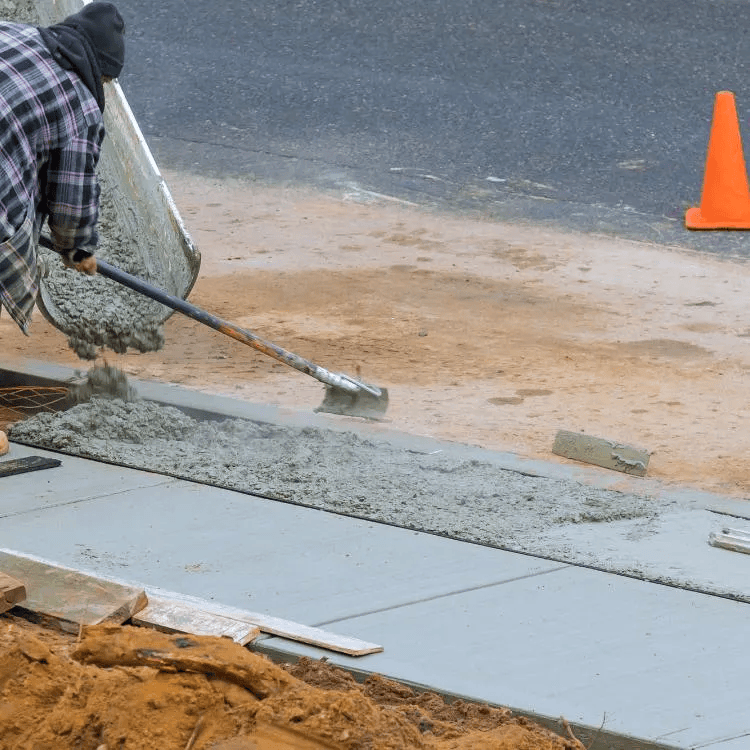
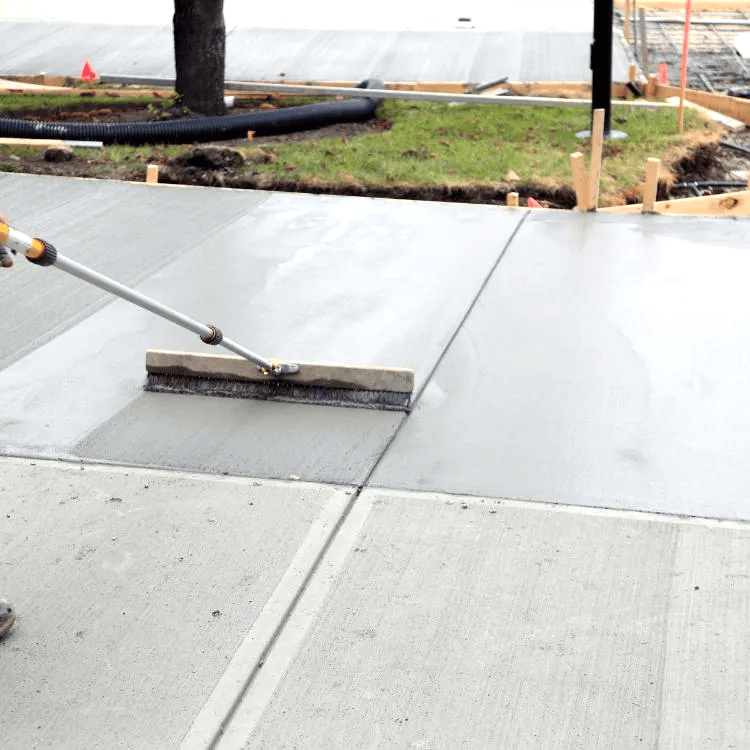
When the concrete arrives by transit mixer, we work quickly and carefully. We use a laser screed and power trowel to get a flat, even surface with the right surface texture for traction and drainage. Expansion joints are cut at proper intervals to control cracking, and we apply a curing compound right after finishing to slow moisture loss. Proper curing is especially important in South Florida's heat. Rushing this step leads to surface cracking and a weaker slab.
Striping, Sealing, and Final Walkthrough
Once the concrete has cured, we apply a concrete sealant to protect the surface from rain, sun, and vehicle fluids. We use quality products like those from Euclid Chemical or W.R. Meadows to give the surface long-term protection. Then we stripe the lot to meet ADA requirements and any layout you need, including 9x18 parking stall dimensions and 10-foot aisle widths where required. Before we call the job done, we walk the entire lot with you to review the finish, joints, drainage flow, and markings.
Every one of these steps has a direct effect on what you will spend now and what you will spend later. That brings us to what a concrete parking lot actually costs in Lauderhill.
Concrete Parking Lot Costs in Lauderhill, FL
If you are planning a new parking lot for your business, apartment complex, or commercial property in Lauderhill, one of the first questions you will have is how much it is going to cost. There is no single answer, because the price depends on several factors specific to your site, your needs, and local conditions here in Broward County. With over 20 years of combined experience pouring concrete and more than 10 years working right here in Lauderhill, we can walk you through what goes into the cost of a concrete parking lot and what you should expect.
What Factors Affect the Price of a Concrete Parking Lot
The size of your lot is the most obvious factor, but it is far from the only one. The condition of your existing subgrade matters a great deal in Lauderhill. Much of the area sits on poorly graded sand or sandy loam subgrade with a high water table, which means proper subgrade stabilization and a solid compacted limerock base are not optional. We typically install a 12-inch compacted limerock base before any concrete goes down. Skipping that step leads to settling, cracking, and costly concrete repairs down the road.
Other factors that shape your final price include slab thickness, reinforcement type, surface drainage requirements, and whether the lot needs a specific surface texture or marking layout. For most commercial parking lots, we pour a 6-inch slab with 4,000 psi compressive strength using Portland cement Type I/II, often blended with fly ash to improve workability in South Florida's heat. Reinforcement choices such as epoxy-coated rebar or welded wire reinforcement also affect material costs. Concrete sealants, expansion joint filler, and polyurethane joint sealant are additional line items that protect your investment long-term and should not be left out of the budget.
Average Cost Ranges for Commercial Parking Lot Projects
In general, concrete parking lot construction in the Lauderhill area runs higher per square foot than asphalt, but the longer lifespan and lower parking lot maintenance costs often balance that out over time. For a standard commercial lot with proper base preparation, reinforcement, and a clean finish, you can expect to pay somewhere in the range of $7 to $12 per square foot depending on site conditions and project scope. Larger lots tend to bring the per-square-foot cost down. Lots near areas like Inverrary Boulevard or State Road 7 that see heavy delivery vehicle traffic may require heavier-duty concrete specifications, which can push costs toward the higher end of that range.
New Installation Versus Replacement Costs
A brand-new parking lot construction project on a cleared site is generally more straightforward to price than a replacement. When we are removing an existing surface, you have demolition and haul-away costs to factor in on top of the new work. If the old lot had drainage problems, those need to be corrected before any new concrete goes down. In some cases, concrete resurfacing is an option if the existing slab is structurally sound but showing surface wear. That can cost less than full replacement, though it is not always the right solution. We will always give you an honest assessment of whether repair or full replacement makes more sense for your specific situation.
How to Get an Accurate Estimate for Your Property
The only way to get a number you can rely on is to have someone walk the site. We review the square footage, existing soil conditions, drainage patterns, and any permit requirements from the Lauderhill Building Division or Broward County Permitting Licensing and Consumer Protection office. Every commercial parking lot in Lauderhill needs to meet the Florida Building Code and any applicable Broward County amendments, and we factor permit and inspection costs into your estimate upfront so there are no surprises. Once we have looked at everything, we put together a written estimate that breaks down materials, labor, base preparation, and finishing so you know exactly where your money is going.
Cost is an important part of the decision, but it is not the only one. How concrete compares to asphalt in terms of performance, maintenance, and long-term value is worth looking at carefully before you commit to either surface.
Concrete vs. Asphalt Parking Lots
If you are planning a new parking lot for your Lauderhill business or property, one of the first decisions you will face is whether to go with concrete or asphalt. Both materials can work, but they perform very differently over time, especially here in South Florida. We have been working in Lauderhill for over 10 years, and we have poured a lot of concrete across areas like Inverrary, the Lauderhill Mall area, and along busy corridors like State Road 7 and Oakland Park Boulevard. That experience gives us a clear picture of how each surface holds up under real local conditions.
Upfront Cost Differences Between Concrete and Asphalt
Asphalt typically costs less to install upfront than concrete pavement. That is a fair point, and we will not pretend otherwise. If your budget is the main concern right now, asphalt may look more attractive at first. However, the lower starting price comes with trade-offs that tend to show up within the first few years, especially with heavy vehicle traffic.
Long-Term Maintenance and Repair Comparison
This is where the asphalt vs. concrete conversation shifts. Asphalt requires regular sealing, patching, and sometimes full resurfacing every few years. Concrete, when installed correctly with the right mix, reinforcement, and jointing, can last several decades with far less attention. A well-built concrete parking lot using 4,000 psi compressive strength concrete over a 12-inch compacted limerock base is built to hold up. Concrete repairs, when they do come up, tend to be more straightforward to address and less frequent overall. Parking lot maintenance costs for concrete are generally lower over a 20 to 30 year period.
Performance Differences in South Florida's Climate
South Florida's heat, heavy rain, and high humidity are hard on paving materials. Asphalt softens in extreme heat, which is a real concern during Lauderhill summers. It can rut under the load-bearing capacity demands of delivery trucks or constant daily traffic. Concrete holds its shape in the heat and sheds water better when properly graded for surface drainage. Lauderhill also sits on terrain with a high water table and poorly graded sand subgrade in many areas, which means site preparation and drainage design matter a great deal. Heavy-duty concrete with proper surface texture and expansion joints handles these conditions better than asphalt over time.
Which Surface Makes More Sense for Your Property
For most commercial properties, apartment complexes, and high-traffic lots in Lauderhill, concrete tends to be the more practical long-term choice. The higher upfront cost of parking lot construction is offset by fewer repairs, lower maintenance needs, better performance in the heat, and a cleaner look that reflects well on your property. If you are near a major road like University Drive or Broward Boulevard and need a surface that handles steady traffic without frequent attention, concrete is worth the investment. That said, every project is different, and we are happy to walk through the specifics of your site before you make any decisions. When issues do come up with an existing concrete lot, understanding your repair and replacement options is the next step.
A Concrete Crew That Knows Lauderhill
We are a concrete contractor based in Lauderhill, FL, and we have been working in this area for over 10 years. Our team brings more than 20 years of combined experience pouring and finishing concrete across a wide range of residential and commercial projects. From driveways and patios to foundations and retaining walls, we have handled jobs of all sizes throughout Lauderhill and the surrounding communities in Broward County.
Working in South Florida means understanding conditions that most other parts of the country do not have to deal with. The heat, humidity, heavy seasonal rain, and shifting soils here can all affect how concrete performs over time. We have spent years learning how these local conditions impact curing, drainage, and long-term durability. That knowledge guides every decision we make on a job, from how we prepare the site to how we select the right concrete mix for the conditions.
We work on projects in Lauderhill neighborhoods ranging from smaller residential properties near the Inverrary area to commercial sites along State Road 7 and Oakland Park Boulevard. Whether you need a new concrete slab, a resurfaced pool deck, or a repaired driveway, we approach each job the same way: with careful prep work, proper reinforcement, and a finish that holds up to the Florida climate.
Our goal on every project is straightforward. We want the concrete we pour for you to last for decades without becoming a recurring problem. That means doing the job right from the start, using the correct materials, and not cutting corners on steps that matter. When you reach out to us, you get a team that knows Lauderhill, knows concrete, and knows what it takes to make both work together.
Concrete Parking Lot Repair and Replacement
Even a well-built concrete parking lot will eventually show wear. South Florida's heat, heavy rain, and high water table all put stress on pavement over time. When your lot starts showing problems, knowing whether to repair or replace can save you money and prevent bigger issues down the road.
Common Signs Your Parking Lot Needs Repair or Replacement
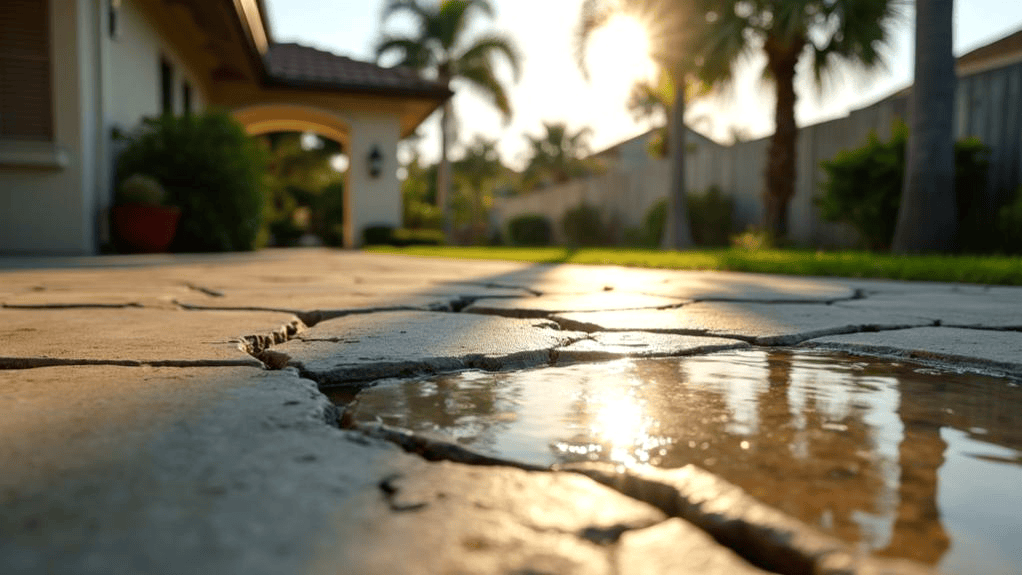
Some warning signs are easy to spot. Cracking is one of the most common issues we see in Lauderhill, especially in lots built on poorly graded sand or expansive clay subsoil. Surface spalling, where the top layer begins to flake or pit, often means the concrete mix or curing process was not done correctly from the start. You might also notice low spots where water pools after rain, uneven joints, or sections that have started to sink or heave. These are not just cosmetic problems. They create trip hazards for pedestrians and can cause vehicle damage over time. If your lot is showing any of these signs, it is worth having us take a closer look before things get worse.
When Repairs Are Enough Versus When Full Replacement Is Needed
Not every damaged lot needs to be torn out and rebuilt. Concrete resurfacing or targeted concrete repairs can work well when the damage is limited to the surface layer and the base underneath is still stable. For example, if you have isolated cracks, we may be able to inject them with epoxy crack injection resin and seal the joints with a polyurethane joint sealant to stop water from getting in. Applying concrete sealants can also help protect the surface and extend its life.
Full replacement makes more sense when the slab has lost structural integrity, when the load-bearing capacity has been compromised, or when settling has become widespread across the lot. If we find that the compacted limerock base has shifted or that the subgrade has eroded beneath the slab, resurfacing alone will not hold up. In those cases, rebuilding to current standards, including a proper 12-inch compacted limerock base and a 6-inch slab thickness with the right reinforcement, is the more cost-effective long-term choice. We work through the Lauderhill Building Division and Broward County Permitting to make sure any replacement project is permitted and inspected correctly.
How We Handle Repairs Without Shutting Down Your Entire Lot
We understand that closing a parking lot, even briefly, can disrupt your business or tenants. For commercial properties along busy corridors like State Road 7 or Oakland Park Boulevard, that kind of downtime has a real cost. When possible, we section off only the area being worked on and keep the rest of the lot open. We use a concrete saw to cut clean edges around damaged panels, remove and replace only what needs to go, and match the surface texture and finish to the surrounding concrete as closely as we can.
Proper curing after repairs is just as important as the repair itself. We use curing compounds that meet ASTM standards and give each repaired section enough time to reach full strength before reopening it to traffic. Skipping this step is one of the most common reasons repairs fail early.
Whether you need a small patch or a major panel replacement, the approach is the same: assess what is actually wrong, fix the root cause, and do the work right the first time. That leads into the broader question of experience, which is something we can speak to directly when it comes to commercial concrete work here in Lauderhill.
Our Experience With Commercial Concrete in Lauderhill
Over 20 Years of Concrete Experience and 10 Years Serving Lauderhill
We have been pouring concrete for over 20 years and have spent more than a decade working specifically in Lauderhill. In that time, we have learned a lot about what it takes to build a parking lot that holds up in South Florida. The sandy loam subgrade and high water table common across this part of Broward County require careful site preparation before a single yard of concrete is poured. We account for those conditions on every job, from selecting the right base material to managing surface drainage so water does not pool or undercut the slab over time. Our work follows standards like ACI 330R and meets the requirements set by the Lauderhill Building Division and Broward County Permitting.
Types of Commercial Projects We Have Completed in the Area
We have worked on parking lot construction for retail centers near Lauderhill Mall, apartment complexes along State Road 7 and Oakland Park Boulevard, and commercial properties throughout the Inverrary and Garden Acres areas. Our experience covers new concrete pavement installation, full replacements, concrete resurfacing, and concrete repairs on existing lots that have cracked or settled. Whether a property needs a straightforward slab or a more involved layout with load-bearing capacity built for delivery trucks and heavy vehicles, we have done that kind of work here.
How We Work With Property Managers, Business Owners, and Developers
We understand that a parking lot project can disrupt daily operations, so we plan around your schedule as much as we can. When you contact us, we start by walking the site, reviewing drainage patterns, and talking through what the lot needs to do long term. We handle permitting through the City of Lauderhill Development Services and keep you informed at each stage. Whether you manage one building or a larger portfolio of properties in Broward County, we work the same way with everyone: clearly and without surprises.
Why Hiring Us Is the Right Move for Your Lauderhill Parking Lot
Why a concrete parking lot is a smart investment for your Lauderhill property
After more than 10 years working on commercial concrete projects across Lauderhill, we have seen firsthand what separates a parking lot that holds up from one that starts cracking and settling within a few years. The soil conditions here, including poorly graded sand and a high water table in many areas near Inverrary and along corridors like State Road 7 and Oakland Park Boulevard, make proper site preparation and drainage absolutely essential. A concrete parking lot that is built correctly from the ground up will outperform asphalt and cheaper alternatives for decades.
Here is a quick summary of what you get when you choose concrete and choose us:
- A durable surface built to handle heavy vehicle traffic, delivery trucks, and daily commercial use
- Better load-bearing capacity compared with asphalt, using materials like epoxy-coated rebar and a compacted limerock base
- Proper surface drainage designed around Lauderhill's rainfall patterns and flat terrain
- Lower long-term maintenance costs, with fewer needs for concrete repairs or resurfacing over time
- A clean, professional appearance that improves your property's curb appeal and overall value
- Installation that meets Florida Building Code and Broward County requirements, pulled through the Lauderhill Building Division
- Over 20 years of combined concrete experience and more than 10 years serving businesses right here in Lauderhill
- Protection through proper concrete sealants and finishing techniques that extend the life of your lot
- A crew that shows up with the right equipment and completes the work efficiently to minimize disruption to your business
How to reach us for a free estimate
If you are ready to move forward or just want to talk through what your project might involve, we are here to help. There is no pressure and no obligation. Simply give us a call or fill out the contact form below and we will get back to you to schedule a free on-site estimate for your Lauderhill parking lot project.
Lauderhill FL Concrete
7200 West Commercial Blvd
Lauderhill, FL 33319
Business Hours
| Mon | 7:00 AM – 10:00 PM |
| Tue | 7:00 AM – 10:00 PM |
| Wed | 7:00 AM – 10:00 PM |
| Thu | 7:00 AM – 10:00 PM |
| Fri | 7:00 AM – 10:00 PM |
| Sat | 7:00 AM – 10:00 PM |
| Sun | 7:00 AM – 10:00 PM |